
Powered By



Do you ever feel off balance or dizzy, like your body isn’t moving the way it used to? If you’re living with amyloidosis, this could be a familiar feeling. Amyloidosis is a rare disease where abnormal proteins build up in the body’s tissues and organs. This buildup can affect many parts of the body, including areas that help you stay steady on your feet. Balance problems can be serious and may significantly affect your quality of life.
Sign up to view the results!
 Continue with Facebook
Continue with Email
Continue with Facebook
Continue with Email
In this article, we’ll explain how amyloidosis can affect your balance and provide six practical tips to help you feel more stable and reduce your risk of falling.
Amyloidosis is a condition in which abnormal proteins, called amyloids, build up in your organs and tissues. This can disrupt normal function and lead to various symptoms, including issues with balance.
Here are some ways amyloidosis can cause balance problems.
One of the main ways amyloidosis affects balance is through neuropathy — damage to the nerves. This often happens when amyloid proteins build up in nerve tissues, interfering with the signals that travel between your brain and body. When those signals are disrupted, the muscles and coordination needed to stay steady don’t work as well.
The severity of neuropathy can vary widely from person to person. It can affect sensory nerves (which help you feel), motor nerves (which help you move), and autonomic nerves (which control bodily functions like blood pressure and digestion). All of these types of nerve damage can make it harder to maintain balance.
Different types of amyloidosis can cause nerve damage, including hereditary transthyretin amyloidosis (hATTR), amyloid light-chain amyloidosis (AL amyloidosis or primary amyloidosis), and AA amyloidosis (secondary amyloidosis).
Nerve damage can lead to symptoms such as:
Hypotension — low blood pressure — is common in people with amyloidosis, especially those with hATTR. When blood pressure drops too low, it can cause dizziness or lightheadedness, especially when standing up quickly. This is known as orthostatic hypotension.
Normally, when you stand, gravity pulls blood toward your legs, and your body quickly adjusts to keep enough blood flowing to your brain. But in people with amyloidosis, this adjustment may not work as well — often due to nerve damage (autonomic neuropathy) that affects blood pressure regulation.
Low blood pressure can make it harder to stay steady and increases the risk of falling. Falls caused by orthostatic hypotension can lead to serious injuries. Dehydration can also make hypotension worse, so staying hydrated is important.
Amyloidosis often causes fatigue, a deep, ongoing tiredness that doesn’t go away with rest. When you feel constantly tired, your muscles may not work as efficiently, making it harder to walk, stand, or perform daily activities. Over time, low energy levels may increase the risk of stumbling, losing your balance, or falling.
One MyAmyloidosisTeam member shared, “My husband experiences loss of consciousness at times, and other times he’s just so tired that he falls down.”
Along with amyloidosis, other health issues may contribute to balance problems. For example, the nerves in your inner ear help your body sense movement and stay upright. If amyloidosis affects these vestibular nerves, your balance may be disrupted.
A thorough medical evaluation can help rule out or identify other causes of imbalance. Sometimes, amyloidosis is initially mistaken for other conditions — and in some cases, it appears alongside them.
One MyAmyloidosisTeam member shared, “My husband was diagnosed a year ago but had symptoms of ATTR for over 12 years. He has severe balance issues. Doctors initially thought it was vestibular neuritis, but it’s worsened, with more frequent bouts of imbalance and falls. Has anyone else experienced inner ear nerve damage attributed to amyloidosis?”
Sometimes amyloidosis appears alongside other conditions that can affect your balance, like diabetes. While these conditions may not be directly related to amyloidosis, they can still make it harder to stay steady.
Balance problems can make everyday tasks difficult. MyAmyloidosisTeam members share how their balance issues affect their daily activities and mental well-being.
“I walk around like a little mouse, close to the walls so I don’t fall,” one member wrote. “I miss the energy I used to have. I used to do my chores quickly. Now, I still do them, but I have to rely on willpower instead of energy.”
“I struggle with constantly bumping into doorways and such. Have the bruises to show it!” another member commented.
“I’ve learned some coping skills,” a member shared, “but my fear of falling is always there.”
While balance issues can be challenging, there are ways to help improve your stability and feel safer.

Here are six tips that can help you stay balanced and reduce your chances of falling. These tips should complement medical advice, and any balance issues should be discussed with your doctor.
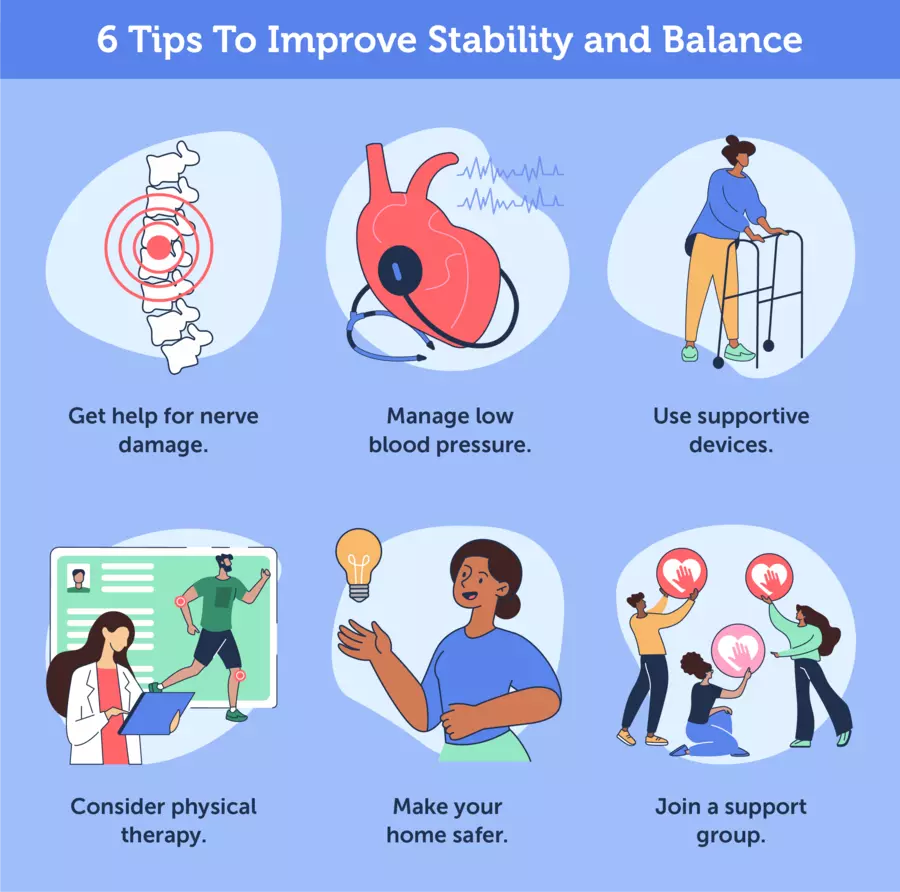
If amyloid neuropathy is affecting your balance, talk to your doctor about possible treatments. These can help reduce balance problems and improve coordination. Your doctor can guide you in finding the best options for your situation.
If you feel dizzy, it might be due to low blood pressure. There are simple steps you can take that may help:
Always check with your doctor before trying new strategies. They can help you find the best ways to manage your blood pressure and stay safe.
One member recommends standing up slowly and pausing before walking: “If you give yourself a minute after standing and before moving, you’re safer.”
Supportive devices, like canes, walkers, or braces, can help you stay steady and reduce your risk of falling. These devices can take pressure off your joints, improve your balance, and boost your confidence while walking.
“Get a walker,” one MyAmyloidosisTeam member recommended. “It helps a lot with balance.”
If amyloidosis is affecting your balance, working with a physical therapist may help. They can guide you through exercises that build strength and improve coordination. Some examples include:
Practicing these regularly can make daily activities safer and easier.
Several members have had success working with a vestibular physical therapist, who specializes in balance issues. “Physical therapy from a vestibular physical therapist has really helped my balance improve,” one member said.
Simple changes around your home can go a long way toward preventing trips and falls. Try these tips to make your living space safer:
“I have a cane next to my bed to use when I get up. This is precautionary, as my balance is not always functioning normally,” a member wrote.
Connecting with others who understand what you’re going through can make a big difference. Whether it’s online or in person, joining a support group can help you feel less alone, more informed, and more hopeful.
Hearing how others cope — and what’s worked for them — can offer practical tips, emotional support, and motivation to keep going, even on tough days.
On MyAmyloidosisTeam, people share their experiences with amyloidosis, get advice, and find support from others who understand.
What’s helped you manage balance or stability issues with amyloidosis? Let others know in the comments below.

Still have questions about your condition? I can help.
Get updates directly to your inbox.



 Continue with Facebook
Continue with Email
Continue with Facebook
Continue with Email
Continue with Facebook
Continue with Email
Continue with Facebook
Continue with Email
Become a member to get even more





 Join
Join




 Your Privacy Choices

This is a member-feature!
Sign up for free to view article comments.
I was diagnosed in July 2017 and have been on treatments beginning in December 2018 as the first treatment was approved by FDA. My Httr Amyloidosis also impacts all of the conditions discussed in the… read more
We'd love to hear from you! Please share your name and email to post and read comments.
You'll also get the latest articles directly to your inbox.